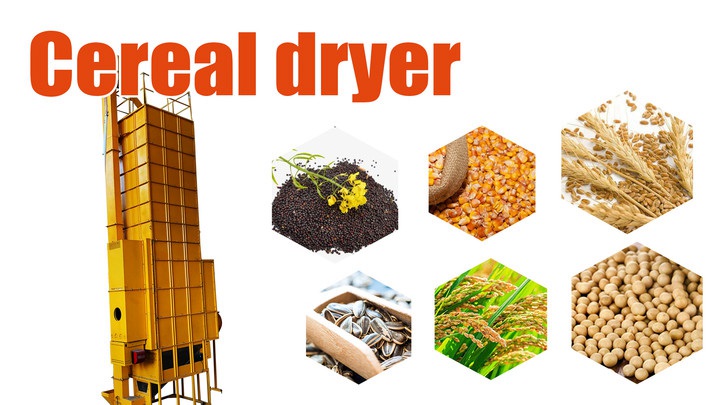
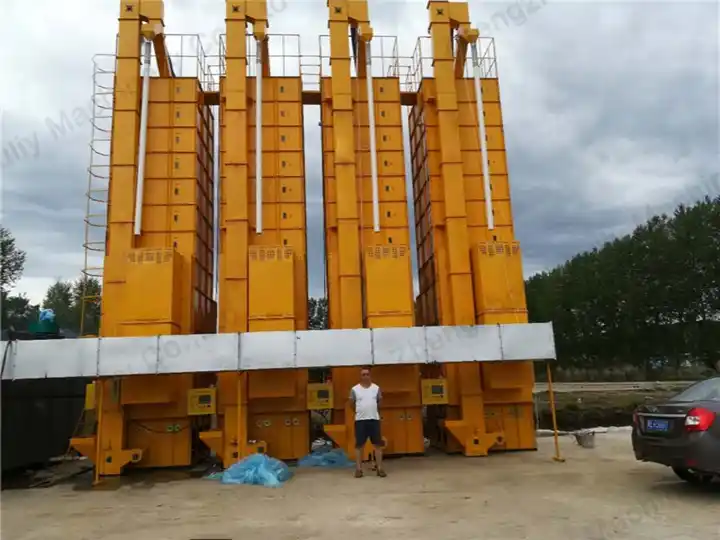
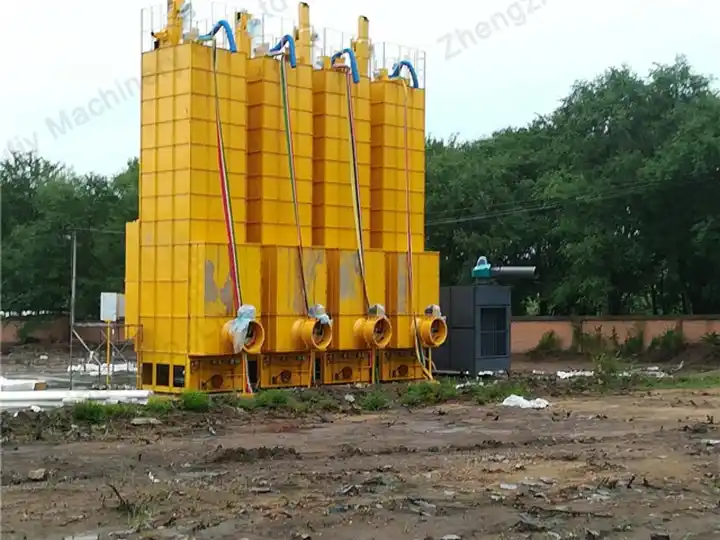
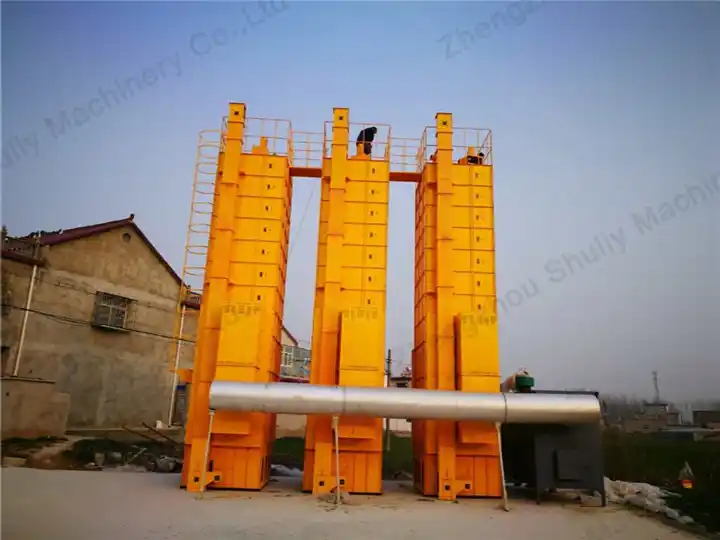
By introducing advanced technology and cooperating with agricultural machinery experts, Shuliy has developed and produced the low-temperature circulating mixed flow cereal dryer, also called the tower drying machine.
This type of product has adopted a Siemens PLC automatic intelligent control system and is equipped with a variety of heat source solutions, which have low power, low heat consumption, fast moisture discharge, and low crushing rate.
This tower dryer comes in two models: 5HXG-15 and 5HXG-32. Maximum capacities: corn 3,400 kg/h, wheat 3,250 kg/h, rice 3,500 kg/h, rapeseed 2,600 kg/h.
The cereal dryer also has a wide range of applications, especially suitable for granular grains such as corn, rice, soybeans, rapeseed, etc. Currently, our fourth generation is the most advanced cereal drying machine in the world; it is a revolution in grain machines and will bring huge gains for grain harvest!
Principle of the mixed flow cereal dryer
When the grain drying tower begins to load grain, the grain in the hopper is lifted to the top of the main silo by the elevator, and then the grain is sent into the drying box through the upper auger until it is full.
During drying, the grain emissions continuously discharge the grains at the bottom of the drying section to the lower agitator, the lower agitator sends the grains to the elevator to be lifted to the upper agitator, and the upper agitator sends the grains to the tempering zones. Under the gravity of itself, the grains in the tempering zones slowly move from top to bottom to the four drying sections.
The air heated indirectly by the hot blast stove is sent to the hot blast chamber of the drying section under the action of a centrifugal-induced draft fan. The hot blast continuously crosses the thin grain layer of the drying section from the hot blast chamber, and the flow direction of the hot blast crosses the direction of grain movement.
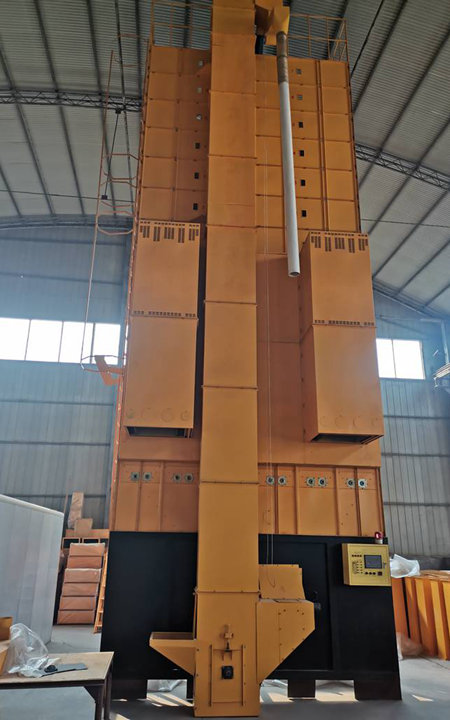
In this way, the hot airflow and the grains have sufficient contact, so that the grains are heated and dehumidified. The waste gas is discharged from the machine from the waste gas chamber. In this way, the drying cycle is realized over and over again until the moisture content of the grain meets the required standard.
Composition of the mixed flow cereal dryer
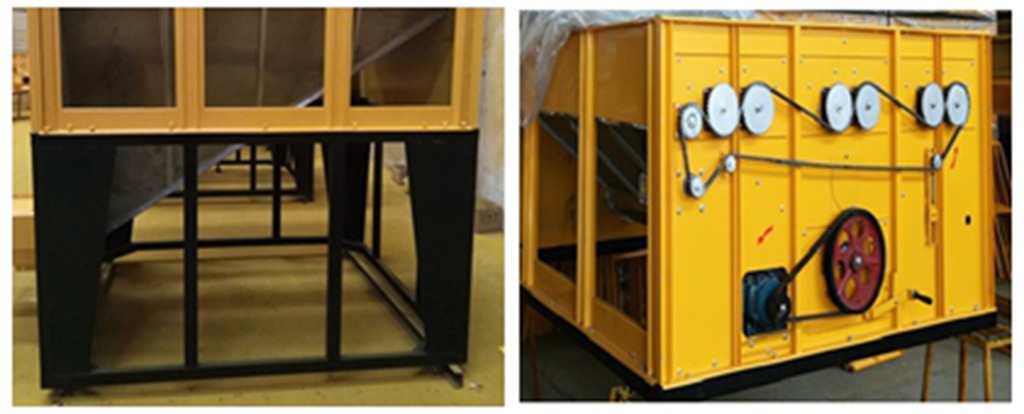
Two different bases for different materials
The gravity-fed base eliminates the screw conveyor, reducing grain breakage caused by collisions with conveyor blades, making it suitable for drying larger grains.
Base with screw conveyor for material with low specific gravity.
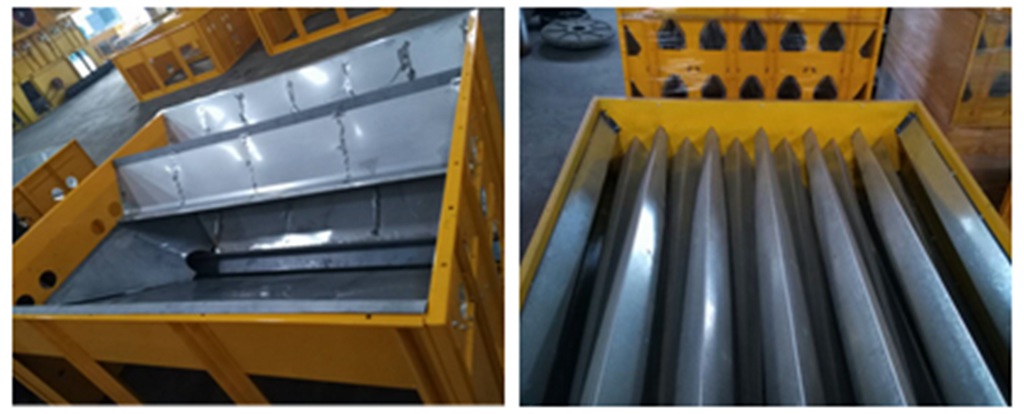
The internal structure of the drying section
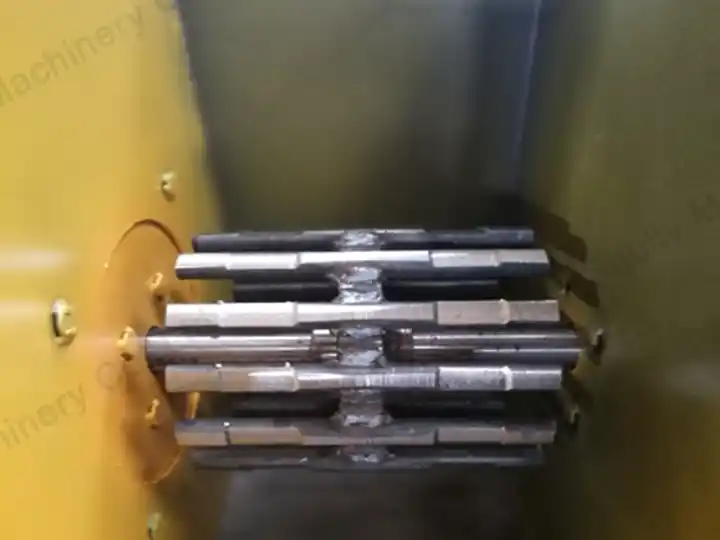
The inside of the drying box is made of 316 stainless steel, galvanized sheet, and a thick steel plate.
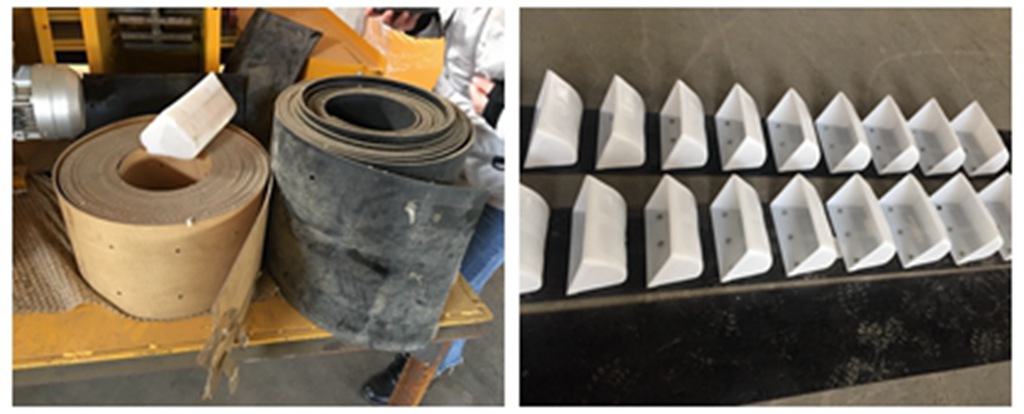
Elevator, conveyor belt, and bucket
The hoist conveyor belt is made of a pure nylon canvas belt. The bucket is made of virgin nylon plastic with good toughness and no brittleness.
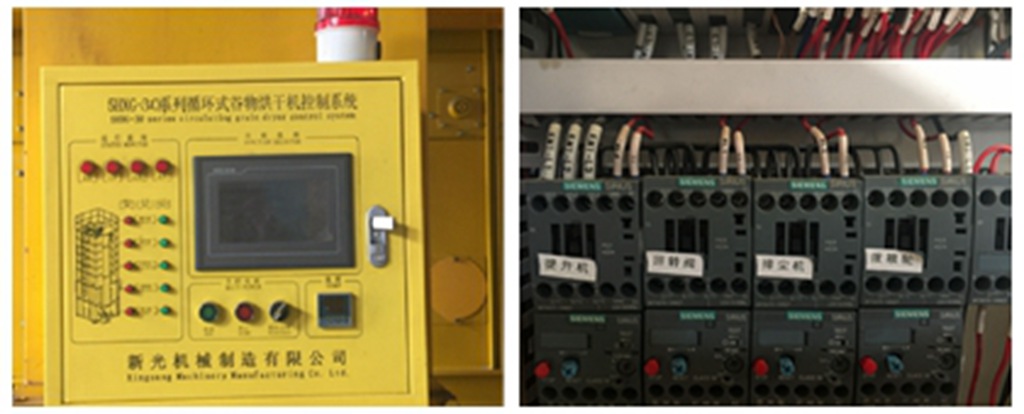
Siemens PLC automatic control system
The fully automatic control system, using the touch screen, is easy to operate, equipped with a fault location display system, and can automatically measure the moisture, and automatically stop when the set value is reached.
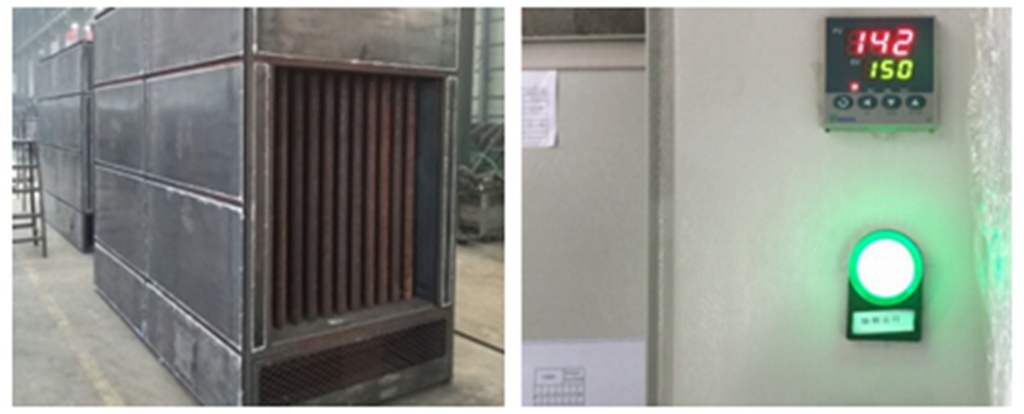
Environmental protection and energy saving hot air stove
The stove uses biomass as a heat source, which can burn tree branches and rice chaff, and can also be transformed into burning oil and gas.
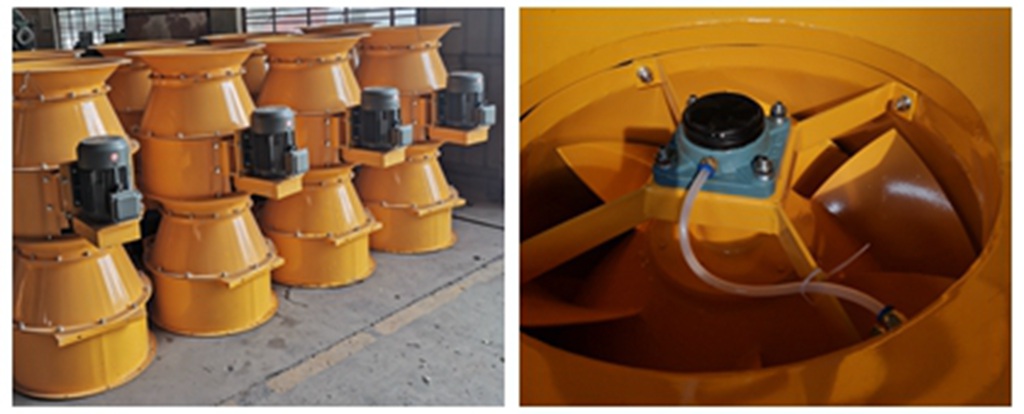
Dehumidified and induced draft fan
Pass the hot air through the drying section and drain away the hot air with moisture.
Advantages of the mixed flow grain dryer
- Low application power: The total power of the grain drying tower (50 tons per day) is 7.6KW. It can be used with general agricultural electricity; no transformer is needed, and the installation is convenient.
- High drying efficiency: Intelligent drying technology is adopted to automatically adjust the drying temperature and time to meet the requirements of different humidity grains. Low-temperature drying makes the grain evenly heated, with a low burst rate and high germination rate. After drying, the grain particles are complete to ensure the quality of the grain.
- Low heat and energy consumption: The dryer adopts low temperature and constant temperature and uses the clean energy of heat exchange gas to fully cover and dry without dead ends, with no secondary pollution. The performance is stable, and the moisture of the drying is consistent between the surface and the inside, so that the grain will not be mildewed, easy to store for a long time.
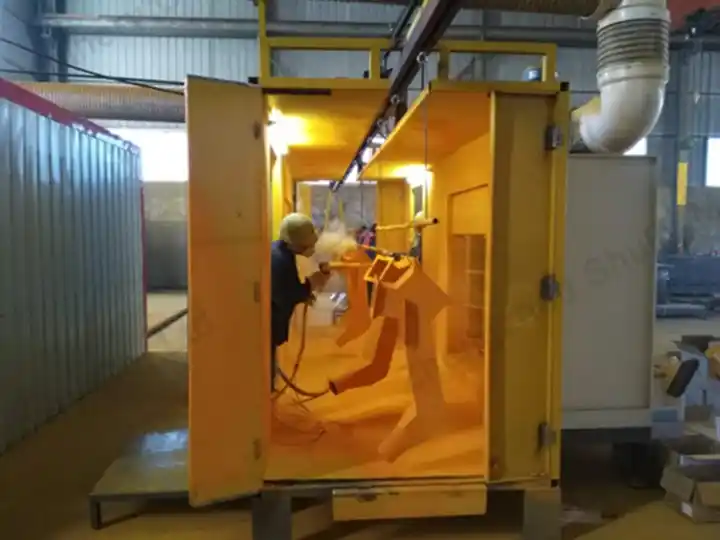
- Long service life: The main components of the dryer are thickened plates and stainless steel runners. The paint surface of the dryer is painted with electrostatic spray paint (more than 5 times the life of general spray paint).
- Low drying cost: Our new type of dryer adopts angled air intake, has the advantages of smooth ventilation, even drying, and no need to clean up all year round.
Heat source options for mixed flow cereal dryer
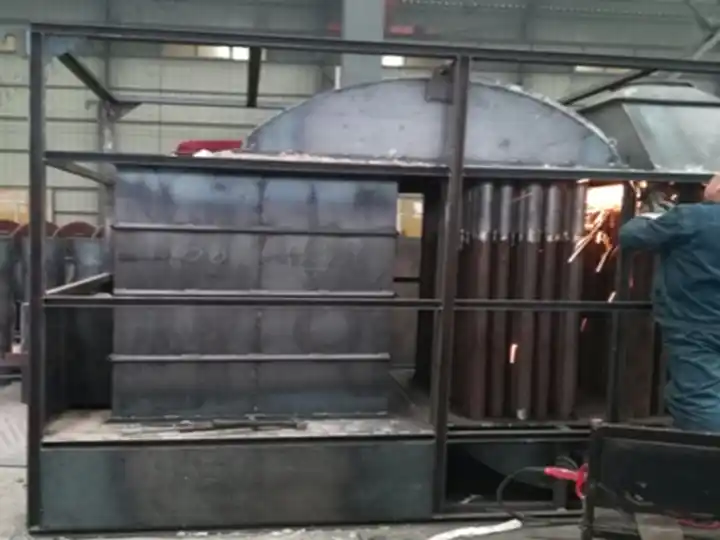
Biomass hot air furnace
Can burn coal, biomass, wood, straw, etc. The heat exchanger is made of S310 high-temperature stainless steel and 20 manganese steel. It keeps grains from changing color, mixing flavors, or producing burnt particles.
Diesel furnace
Uses diesel as fuel. Heat is stable and strong, suitable for continuous drying.
Natural gas burner
Uses natural gas as fuel. Clean and efficient combustion, safe and smoke-free.
Electric burner
Uses electricity as energy. Precise temperature control, easy to operate, and environmentally friendly.
Why choose our low-temperature circulating tower drying machine?
The grain drying generally only lasts ten to twenty days, and it belongs to continuous work, which requires high stability and continuous operation during the process. This also puts forward higher requirements for the dryer in the material application and wear-resistant material.
Standard version vs. Our version
Standard version
The oldest type of dryer has a simple design, high power consumption, high energy use, and is prone to fire.
The cross-flow drying layer is 1.4 m high, with poor ventilation, many dead corners, and uneven drying, achieving only about 0.7% moisture reduction.
Common mesh plates and cross-flow dryers often get clogged by rice husks.
Long drying times lead to over-dried grains, increasing breakage rates, labor costs, fuel consumption, and overall drying costs.
Once the mesh is clogged with rice husks, cleaning is difficult. During each drying season, it must be cleaned multiple times, and maintenance takes away profitable time.
Poor-quality dried rice affects both marketability and price.

Our version
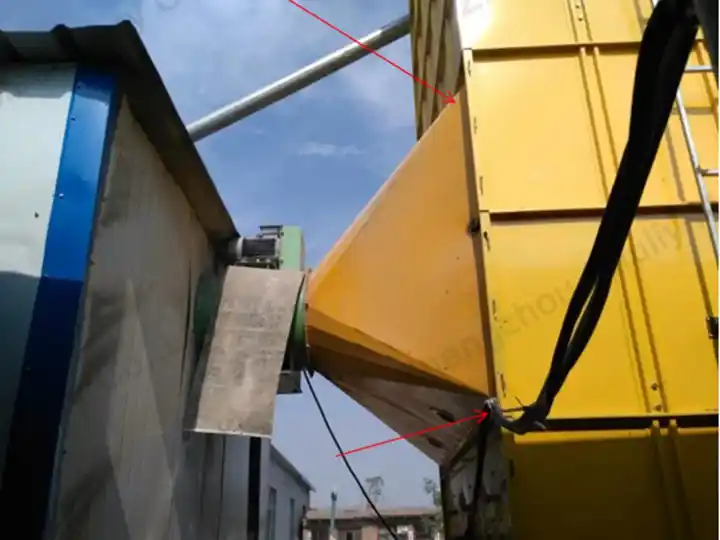
The drive pulley features a hollow design to prevent grain crushing. With a convex profile, the belt stays aligned. Machined on a lathe for high concentricity, it uses NSK Japanese bearings for long-lasting durability.
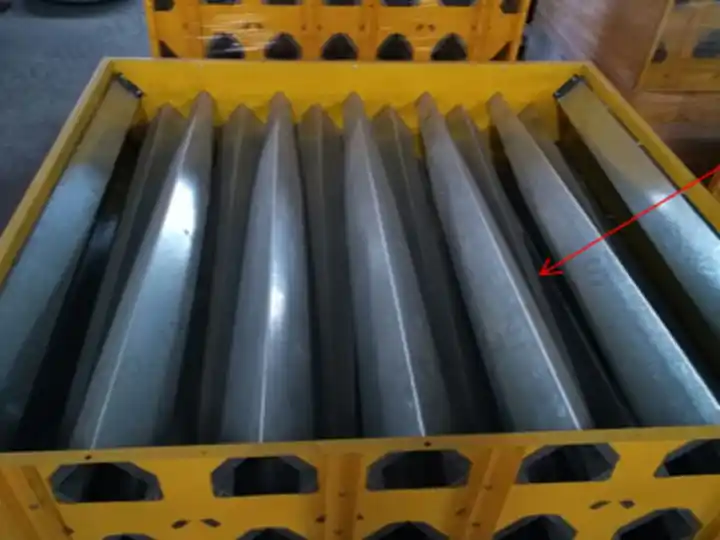
Grains constantly rub against the inner chute steel plates during flow. Ordinary steel wears out easily, so an additional layer of 316 stainless steel (containing nickel and manganese) is embedded in the chute, providing a smooth, wear-resistant, and durable surface.
The dryer supports multiple heating options, including biomass hot-air furnaces, diesel burners, and more.
Both the interior and exterior walls are treated with electrostatic powder coating, making them high-temperature resistant, wear-resistant, and corrosion-resistant, with a lifespan more than five times longer than ordinary paint.
Applications of the tower drying machine
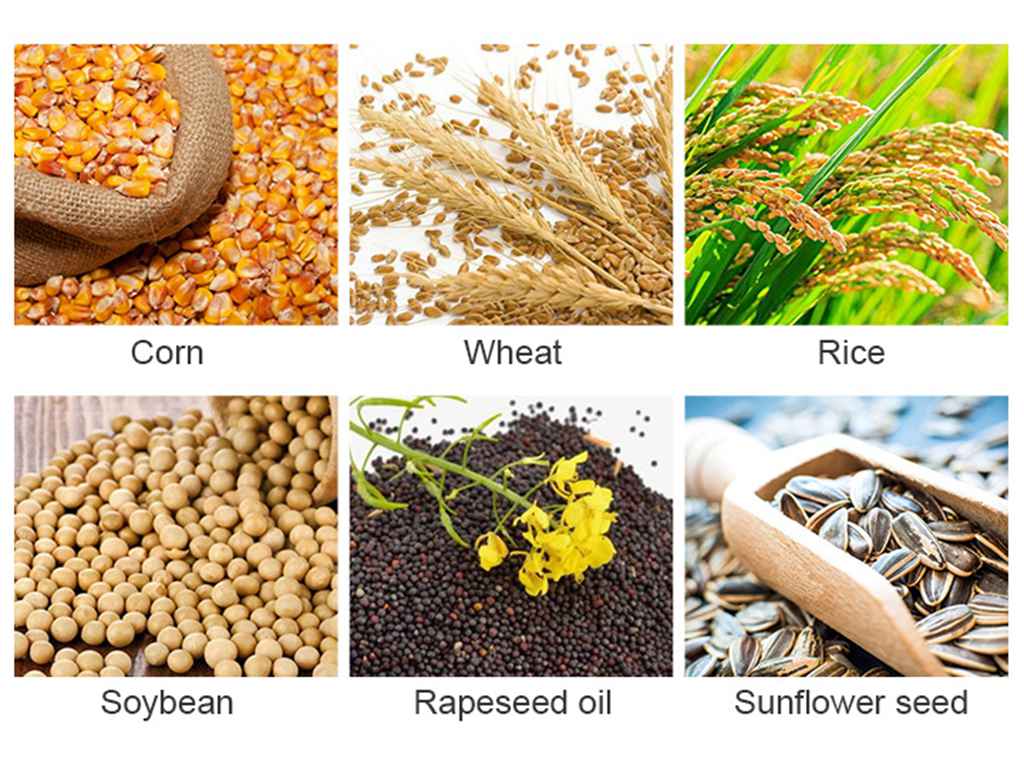
Our new grain drying tower has a wide range of applications, which is suitable for drying rice, wheat, corn, sorghum, soybean, sunflower seed, millet, rapeseed, and other crops and grain seeds.
Technical parameters of the grain drying tower
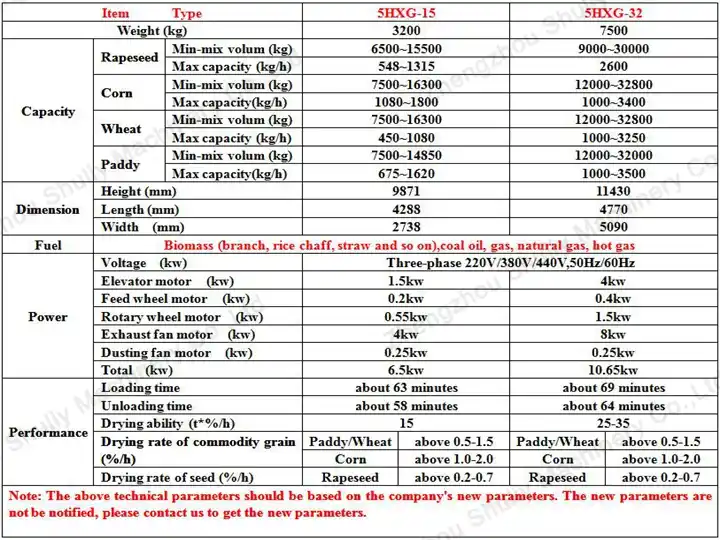
If you want to know more, please leave a message in the pop-up. We will contact you within 24 hours with more details and a quote.
Cases in different countries
Rice drying heat and production analysis
Dry matter calculation
- Raw material input (fresh paddy): 20,000 kg/h
- Initial moisture w1: 20% (wet basis)
- Final moisture w2: 12% (wet basis)
Dry matter
Input × (1 − w1) = 20,000 × (1 − 0.2) = 16,000 kg/h
Final product weight
Dry matter / (1 − w2) = 16,000 / (1 − 0.12) ≈ 18,182 kg/h
Water to be evaporated
W = Input − Final product = 20,000 − 18,182 ≈ 1,818 kg/h
Estimated Heat requirement
Assume latent heat of evaporation of water ≈ 540 kcal/kg, system loss 15%: Q_total = W × 540 × (1 + 0.15) ≈ 1,818 × 540 × 1.15 ≈ 1,129,000 kcal/h
Customer-friendly explanation
This drying line needs to remove about 1.82 tons of water per hour, corresponding to approximately 1,129,000 kcal/h of heat. Converted to steam, it is roughly 2.1 tons per hour (assuming 1 kg of steam ≈ 540 kcal).
Customer-friendly parameter table
| Item | Value / Reference | Description |
|---|---|---|
| Raw material | Paddy (with husk) | Can be adjusted for corn, wheat, rapeseed |
| Input amount | 20,000 kg/h | Adjustable according to production |
| Initial moisture w1 | 20% | Wet basis |
| Final moisture w2 | 12% | Wet basis |
| Dry matter | 16,000 kg/h | Fixed dry weight |
| Final product | 18,182 kg/h | Wet basis |
| Water to be evaporated | 1,818 kg/h | Corresponding heat requirement |
| Total heat requirement | 1,129,000 kcal/h | Includes 15% system loss |
| Steam requirement | ≈ 2.1 t/h | Rough estimate |
| Drying time | About 60–70 minutes | Including loading/unloading |
| Drying temperature | 50–80℃ | Adjustable according to rice color and moisture |
| Heating method | Biomass/coal/gas/steam/hot air | Optional |
Fan reference
| Type | Air volume | Static pressure | Power | Description |
|---|---|---|---|---|
| Circulation fan | 15,000–22,000 m³/h | 900–1,300 Pa | 11–15 kW | Ensures uniform heat distribution |
| Exhaust/dehumidifying fan | 25,000–35,000 m³/h | 800–1,000 Pa | 22–30 kW | Controls moisture removal, prevents condensation |
Equipment dimensions and footprint
| Model | Height (mm) | Length (mm) | Width (mm) |
|---|---|---|---|
| 5HXG-32 | 11,430 | 4,770 | 5,090 |
Footprint: approximately 24 m², suitable for medium to large processing plants.
Key notes
- This drying solution can process about 20 tons of paddy per hour, suitable for high-efficiency continuous production.
- Temperature, airflow, and residence time can be adjusted for different grain types and initial moisture levels.
- Multiple heating options are available: biomass, gas, coal, or steam, providing flexible energy solutions.
- Thermal balance design ensures color retention and high grain integrity.