The rotary dryer is often used for drying limestone. After mining, limestone usually contains a certain amount of moisture. If used directly, it may affect later processing efficiency and product quality.
Since limestone is an important raw material for producing cement, lime powder, and other building materials, rotary dryers are widely applied for its drying process. So, how does the rotary dryer handle limestone drying?
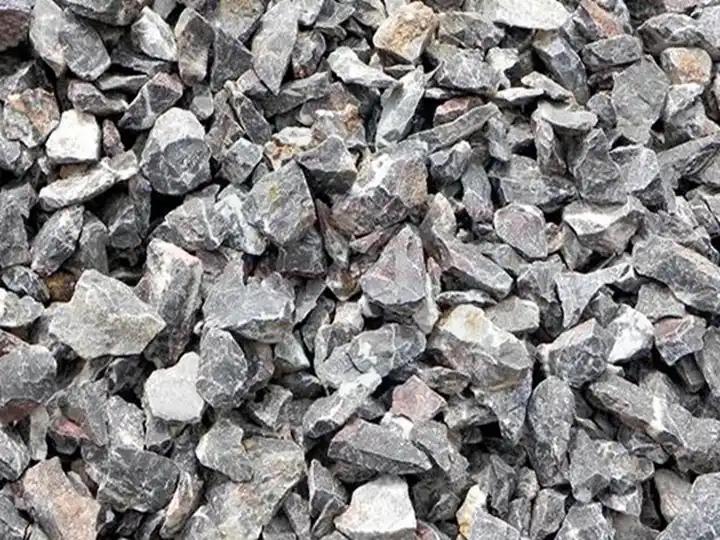
Limestone drying process with a rotary dryer
Feeding and conveying
Limestone is first delivered to the rotary dryer’s feed inlet by a conveyor. To ensure smooth feeding, the feed pipe is usually set at an angle slightly larger than the natural angle of repose of limestone, allowing continuous entry and forward movement inside the drum.
Drying inside the drum
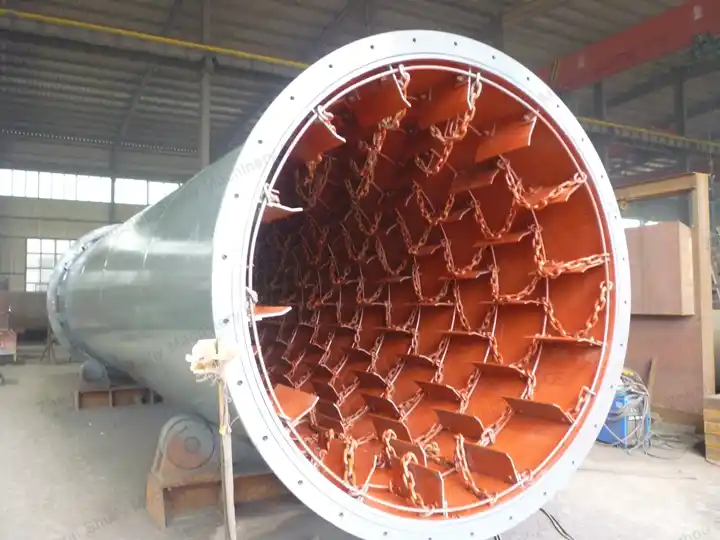
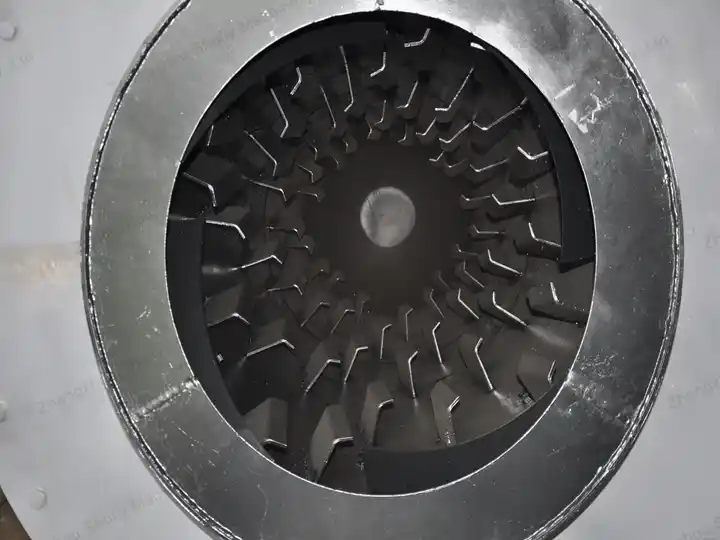
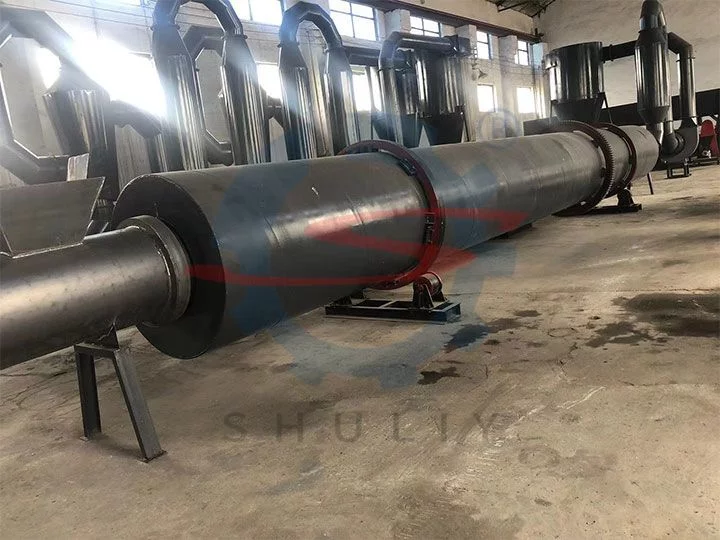
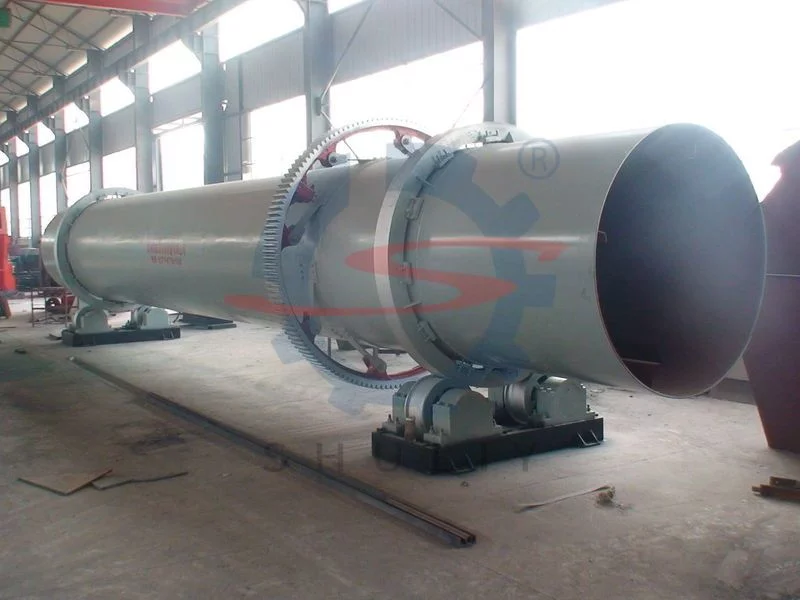
The rotary drum is slightly inclined and rotates slowly. Under the action of rotation and internal lifting plates, the limestone keeps tumbling and mixing. During drying, heat is transferred to the limestone either by direct hot air flow or through the heated drum wall, causing surface moisture to evaporate quickly.
Heat exchange with hot air
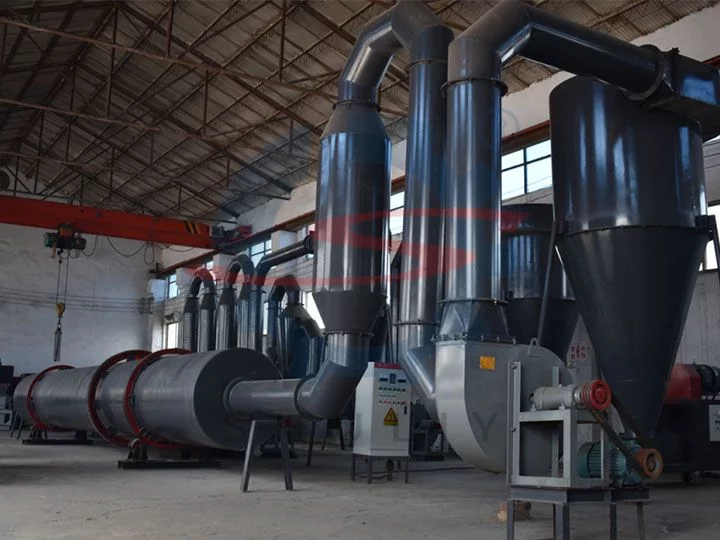
The hot air in the dryer fully contacts the tumbling limestone, carrying away moisture. By adjusting drum speed, inclination, and hot air temperature, different capacities and drying levels can be achieved.
Discharge after drying
After tumbling and heating for a set period, the limestone reaches the required moisture level and is smoothly discharged from the outlet at the end of the drum.
General standards for limestone drying
Moisture content
- Feed moisture: generally 10–25%, some mine raw materials up to 30%.
- Discharge moisture: usually controlled at 1–3%; for cement plants or lime powder production, stricter ≤1%.
Particle size requirements
- Raw material size: ≤30 mm is common; larger pieces need pre-crushing.
- Discharge size: keeps the original particle size; usually, no extra crushing is needed.
Temperature control
- Hot air inlet temperature: 150–400℃ (depending on feed moisture and drum size).
- Discharge temperature: 60–100℃ to avoid reabsorption of moisture or thermal cracking.
Operating parameters
- Drum inclination: 2–5°.
- Drum speed: 1–5 rpm.
- Material retention time: 15–45 minutes, depending on drum length and diameter.
Environmental standards
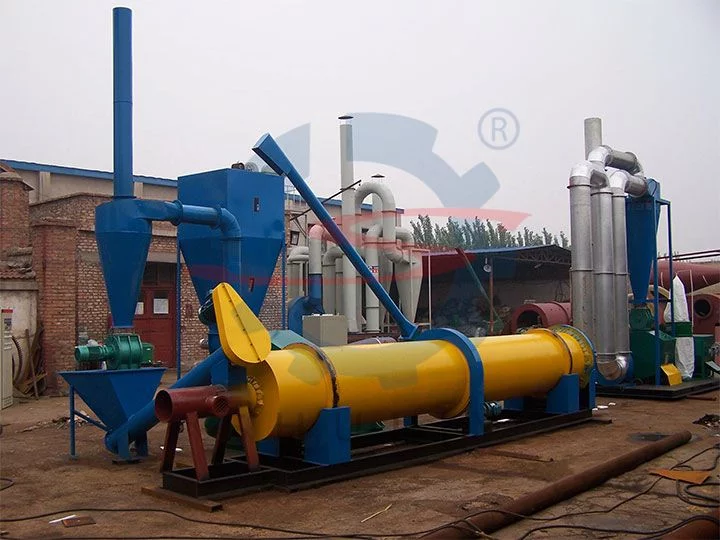
- Exhaust gas must be treated with a dust collector, ensuring dust emissions ≤30 mg/m³ (meeting most national environmental regulations).
Drying uniformity
- Discharge moisture deviation ≤±0.5%.
Energy consumption
- Overall energy use: 0.4–0.8 GJ/ton of limestone, lower with waste heat recovery systems.
Model display
Model(mm) Rotate Speed(r/min)Initial Temperature Power(kw)capacity (t/h)Weight(t)SL600*60003-8≤70030.5-1.52.9SL800*80003-8≤70040.8-2.03.5SL800*100003-8≤70040.8-2.54.5SL1000*100003-8≤7005.51.0-3.55.6SL1200*120003-8≤7007.51.8-514.5SL1200*120003-8≤700112-614.8SL1500*120002-6≤800153.5-917.8SL1800*120002-6≤800185-1225SL2200*120001.5-6≤80018.56-1533SL2200*180001.5-6≤8002210-1853.8SL2200*200001.5-6≤8003012-2056SL2400*200001.5-5≤8003718-3060SL3000*200001.5-5≤8005525-3578SL3000*250001.5-5≤8007532-40104.9Equipment parameter list
If you want to learn more about limestone drying, please contact me through the pop-up chat.