
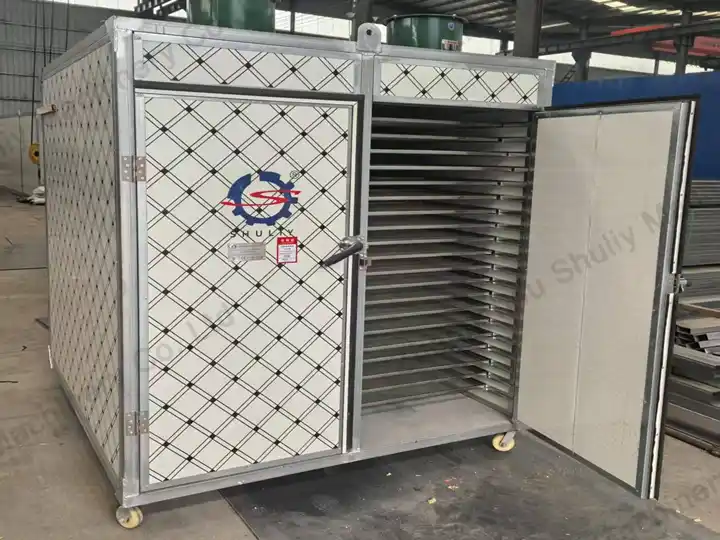
The black tea drying machine is a closed-chamber batch dryer designed to stop fermentation and reduce moisture in fully oxidized black tea leaves. It processes 300–8,000 kg of fermented tea per batch. Freshly fermented leaves enter at 55–65% moisture. The system reduces this to 3–5% within 2–4 hours. Dried black tea is ready for grading, sorting, and packaging for domestic sale or export.
Conventional charcoal-fired dryers run at 100–120°C with no humidity control. This black tea dryer operates at 70–105°C in a sealed chamber with ±1°C temperature precision. The heat pump recycles thermal energy from exhaust air. It delivers a COP of 3.0–4.0. Electricity consumption drops by 60–70% compared to direct electric heating. A PLC touchscreen lets operators program multi-stage drying profiles. Chamber temperature stays within ±1°C. Relative humidity stays within ±3%. The 2–4 hour cycle enables 4–6 batches per day during peak harvest.
Shuliy has manufactured industrial drying equipment for over 20 years. The company has exported heat pump dryers to more than 30 countries. All chambers use 304 stainless steel trays. Housing options include galvanized steel and SUS304. The system meets EU and FDA food-contact material standards. A 12-month warranty covers all mechanical and electrical components. Lifetime technical consultation is included.
Why Must Black Tea Be Dried?
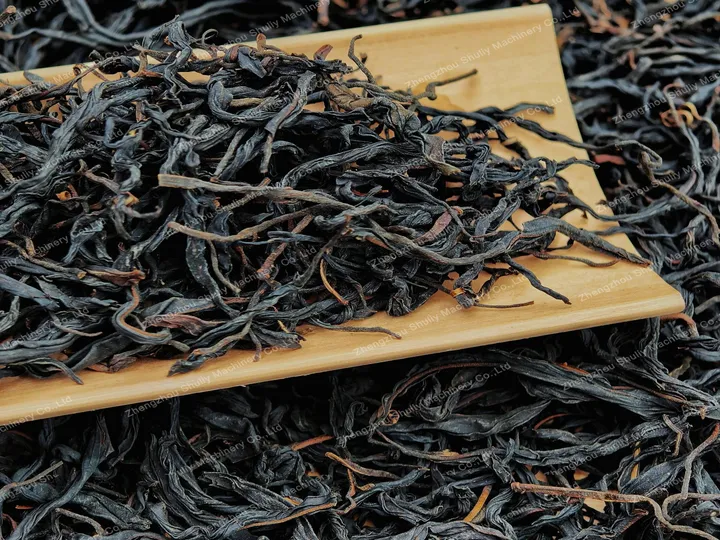
After full fermentation, black tea leaves still contain 55–65% moisture and active enzymes. Without timely and controlled drying, quality deteriorates rapidly.
- Over-Fermentation: Enzymatic activity continues. The tea develops a sour, overripe flavor. Astringency increases. Market grade drops.
- Color Degradation: Uncontrolled moisture causes uneven oxidation. Leaf color turns dull brown instead of the desired dark amber. Buyers reject discolored batches.
- Mold Growth: Moisture above 8% creates ideal conditions for Aspergillus and Penicillium mold. Aflatoxin contamination becomes a food safety risk.
- Aroma Loss: Volatile aromatic compounds evaporate unevenly. The characteristic malty, floral, or fruity notes fade. Tea loses its premium classification.
The Shuliy black tea drying machine solves these problems through staged temperature control. A three-phase drying profile stops fermentation at the optimal point. Moisture draws evenly from each leaf. Aroma compounds are locked in. The final product reaches 3–5% moisture with batch uniformity within ±0.5%.
What Is a Black Tea Drying Machine?
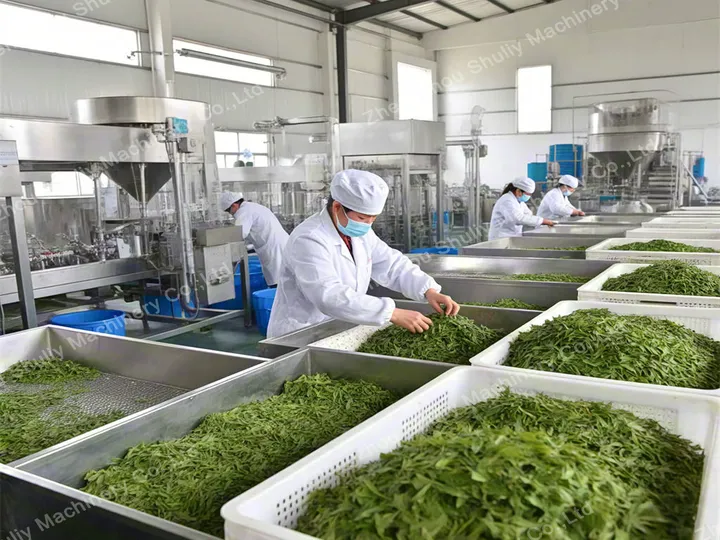
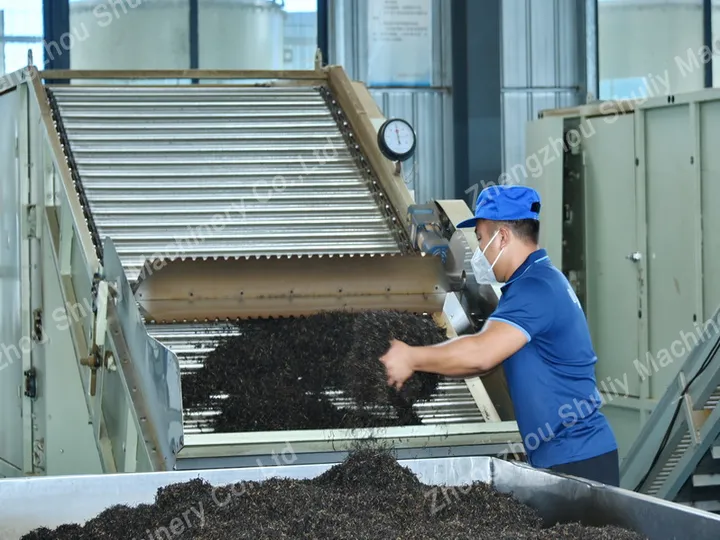
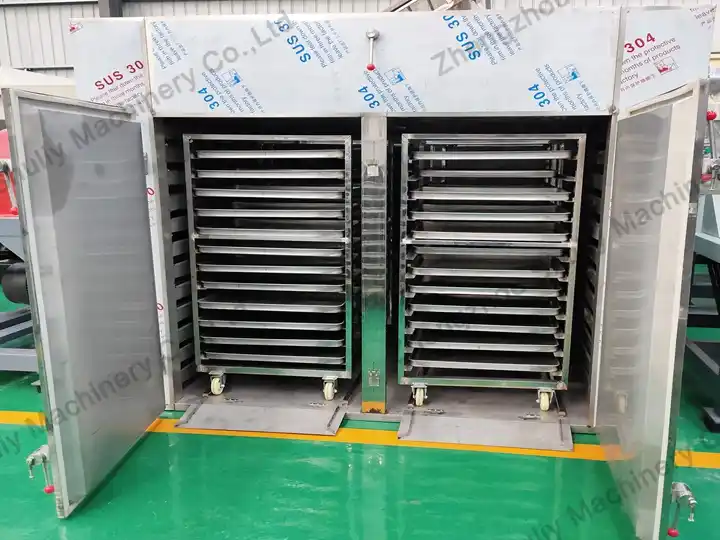
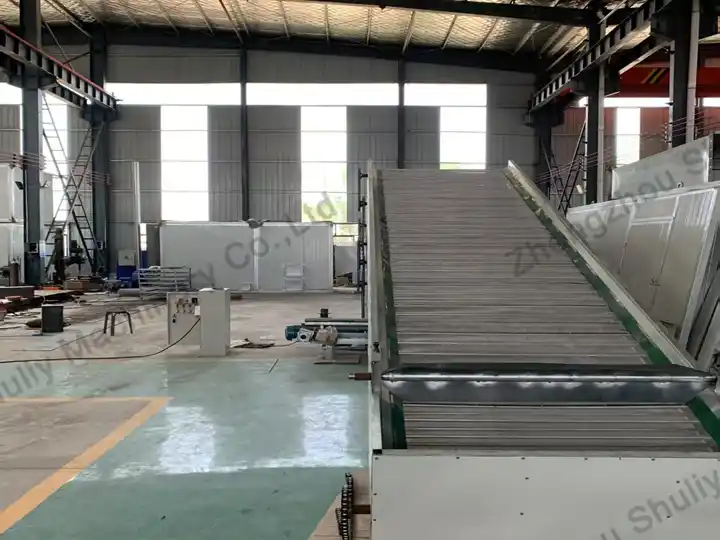
A black tea drying machine is a hot-air circulation device specifically designed for drying fermented black tea. Tea leaves are evenly spread on trays and dehydrated in stages with controllable hot air, achieving stable and efficient drying.
Compared with traditional sun-drying or manual roasting methods, the black tea dryer offers clear advantages:
- Controllable temperature, less affected by the environment
- Batch processing for higher production efficiency
- Stable quality, suitable for standardized production
- Reduces labor costs and reliance on experience
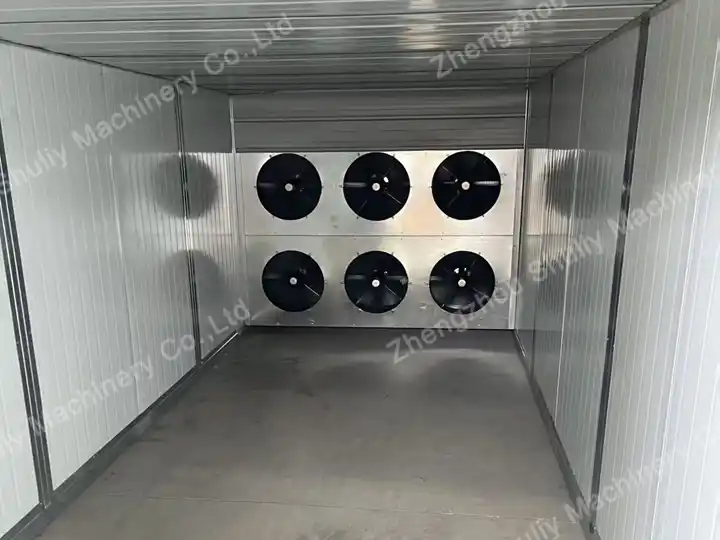
Technical Specifications
| Parameter | Specification | Customer Value |
|---|---|---|
| Model Range | SL-2 to SL-24 | 8 models from 300–8,000 kg for precise capacity matching |
| Drying Method | Air-source heat pump | 70% energy savings versus electric heating; zero combustion emissions |
| Temperature Range | 30–110°C (adjustable) | 70–105°C optimal for black tea; stops fermentation without scorching |
| Control Precision | ±1°C temperature; ±3% RH humidity | Prevents over-drying and under-drying within the same batch |
| Batch Capacity | 300–8,000 kg fermented tea | Scales from small tea estate to industrial export volume |
| Drying Cycle | 2–4 hours/batch | 4–6 batches per day during peak harvest season |
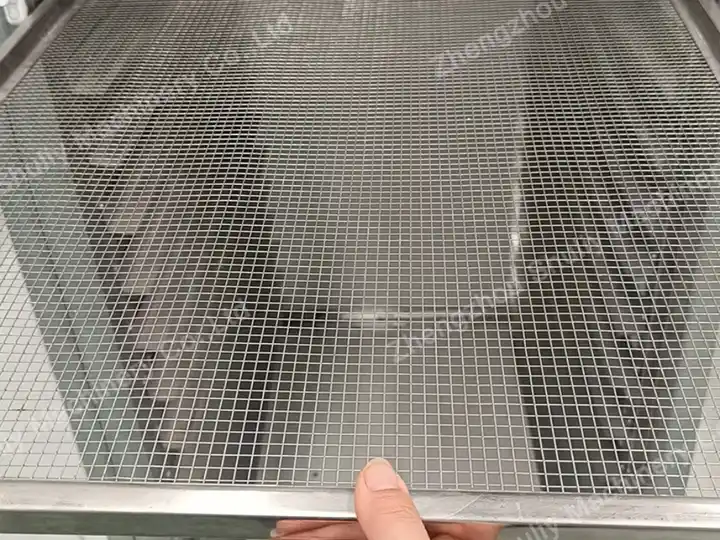
| Tray Material | 304 stainless steel (perforated) | Food-grade, corrosion-resistant, easy to clean |
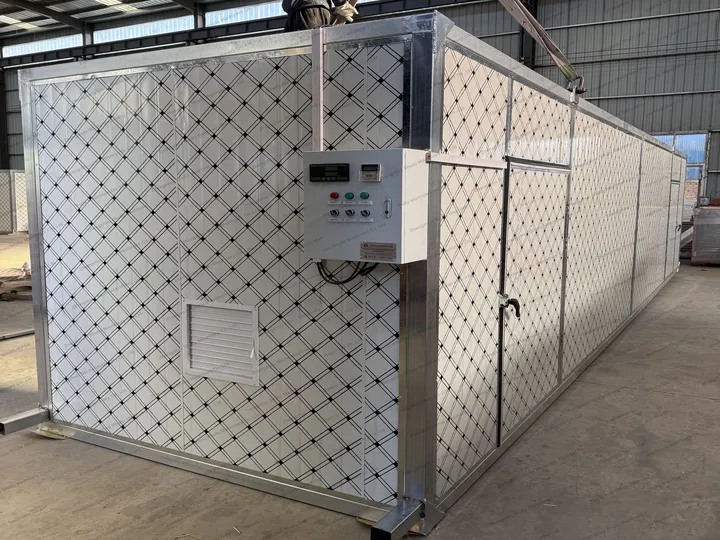
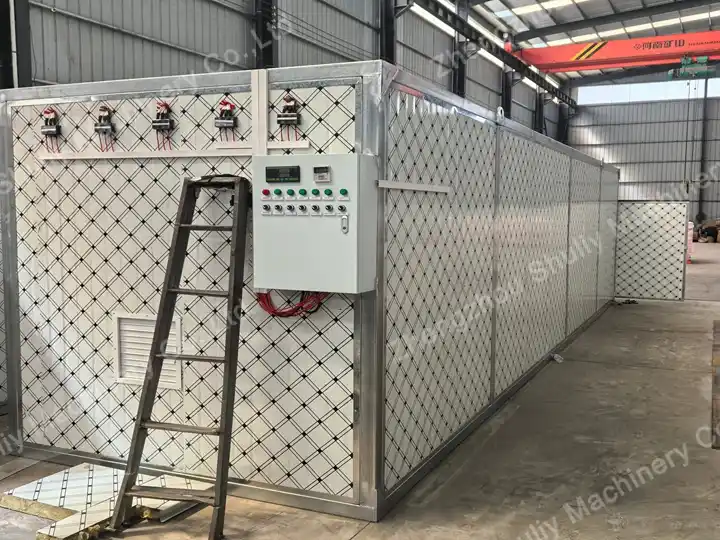
| Chamber Construction | Galvanized steel or SUS304 | 75 mm rock wool insulation; durable frame |
| Control System | PLC with HMI touchscreen | Automated profiles reduce labor and human error |
| Final Moisture | 3–5% | Optimal for grading, packaging, and 24-month storage |
| Power Consumption | 3–36 kW (model dependent) | Low operating cost; suitable for rural tea estate power supply |
| Insulation | 75 mm high-temperature rock wool | 20% energy efficiency improvement over uninsulated chambers |
Model Selection Guide
| Model | Dimensions (mm) | Drying Crews | Capacity (kg/batch) |
|---|---|---|---|
| SL-2 | 4,000 × 1,860 × 2,500 | 2 | 300–600 |
| SL-4 | 6,000 × 1,860 × 2,500 | 4 | 500–1,000 |
| SL-6 | 7,200 × 2,300 × 2,500 | 6 | 800–1,500 |
| SL-8 | 8,500 × 2,300 × 2,500 | 8 | 1,000–2,000 |
| SL-10 | 10,000 × 2,300 × 2,500 | 10 | 1,200–2,500 |
| SL-12 | 8,500 × 3,300 × 2,500 | 12 | 2,500–4,000 |
| SL-18 | 8,500 × 5,000 × 2,500 | 18 | 4,000–6,500 |
| SL-24 | 12,000 × 5,000 × 2,500 | 24 | 5,000–8,000 |
How Does the Black Tea Dryer Work?
The black tea dryer uses a hot-air circulation system, allowing heated air to flow evenly throughout the drying chamber. This continuous airflow removes moisture from the tea leaves, achieving controlled drying.
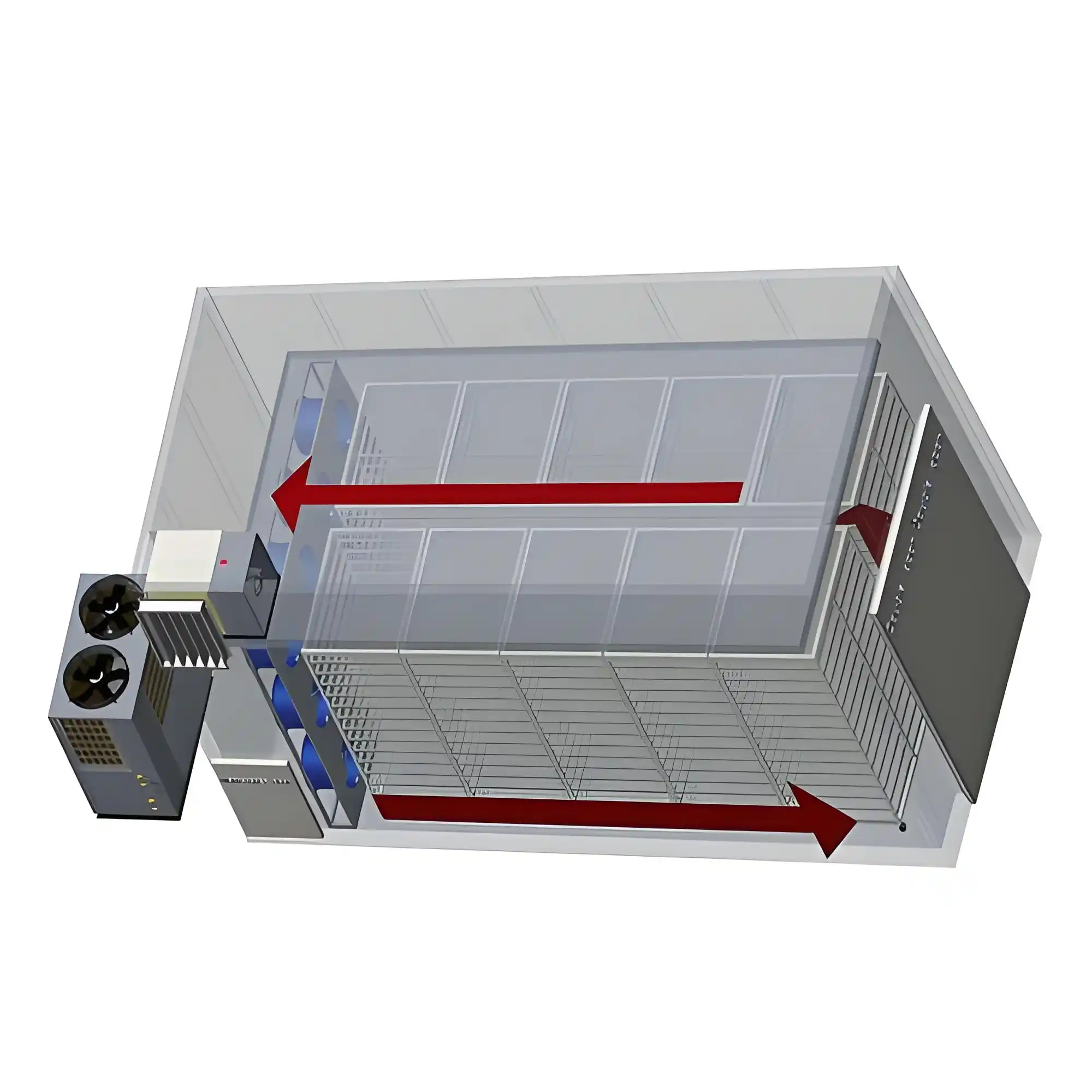
1. Evaporation Stage
Ambient air passes across the evaporator coil. Refrigerant absorbs thermal energy. The air is pre-cooled.
2. Compression Stage
The compressor raises refrigerant temperature and pressure. A high-grade heat source is created.
3. Condensation Stage
Hot refrigerant circulates through the condenser coil inside the drying chamber.
Circulated air heats to the setpoint temperature of 70–105°C.
4. Dehumidification Stage
Warm, moist air passes over the evaporator coil.
Water vapor condenses into liquid. The condensate drains from the system.
The dry air is reheated and recirculated.
5. Control Stage
PLC sensors monitor temperature, humidity, and airflow.
Compressor speed, fan velocity, and exhaust damper position adjust in real time.
The energy-recovery design produces 3–4 kW of usable heat per 1 kW of electrical input.
Conventional electric dryers produce only 1 kW of heat per 1 kW of input.
Black Tea Drying Process: Step by Step
1. Feeding and Spreading
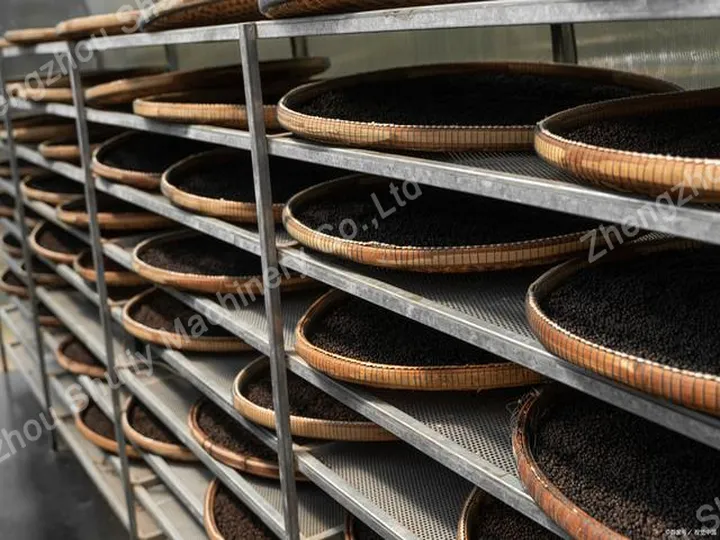
- Fully fermented black tea leaves are evenly spread on drying trays or conveyor belts to ensure uniform heating.
2. Hot-Air Heating and Circulation
- The heating system (electric, gas, or biomass) heats the air, and fans circulate the hot air throughout the drying chamber to avoid local overheating.
3. Staged Temperature-Controlled Drying
- Initial Drying (80–90°C): Quickly removes surface moisture and prevents leaf sticking.
- Main Drying (90–105°C): Even dehydration, fixing aroma and flavor structure.
- Final Drying (70–85°C): Stabilizes moisture content without damaging aroma.
4. Moisture Exhaust and Air Exchange
- Moist, hot air is expelled through the exhaust system while fresh air enters, maintaining a stable drying environment. The final moisture content is generally controlled at ≤5%.
5. Discharge and Cooling
After drying, tea leaves are discharged and cooled naturally or with assistance to prevent reabsorption of moisture.
Main Advantages of Using a Black Tea Drying Machine
Uniform Drying
Tea leaves are heated evenly, ensuring consistent color and flavor.
High Efficiency and Controllable Capacity
Suitable for small tea factories to large-scale production.
Multiple Heat Source Options
Can use electric, gas, or biomass heating, adapting to local energy conditions.
Easy Operation and Maintenance
Suitable for continuous production and long-term use.
Applicable Scenarios for Black Tea Dryers
Black tea dryers are widely used for:
- Processing whole-leaf black tea and broken black tea (CTC)
- Black tea production in small to medium tea factories
- Export-oriented black tea processing enterprises
- Standardized and large-scale black tea production lines

How to Choose the Right Black Tea Drying Machine?
When selecting a black tea drying machine , it is recommended to focus on:
- Required batch or hourly processing capacity
- Available heat source types
- Workshop space and layout
- Local temperature and humidity conditions
Choosing the right model can not only improve drying efficiency but also effectively reduce energy consumption and operating costs.
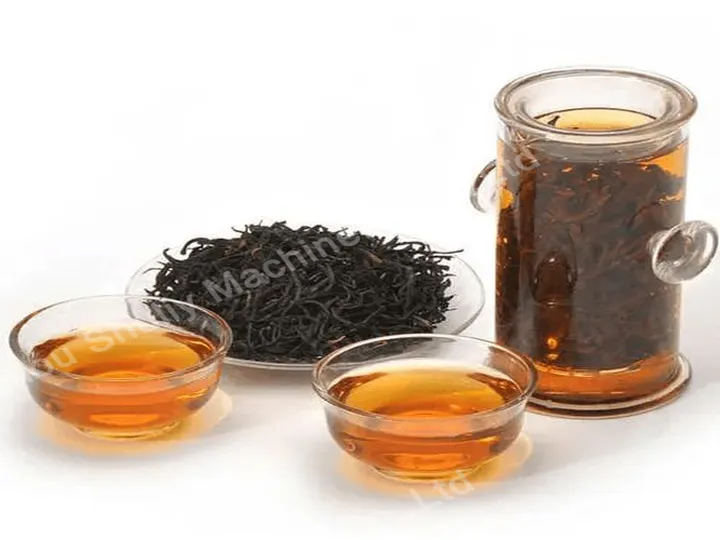
How to Make Black Tea?
Plucking
- Select tender tea leaves with one bud and one or two leaves to ensure raw material quality.
Withering
- Use natural spreading or temperature- and humidity-controlled withering rooms to reduce moisture and soften leaves, preparing them for rolling and fermentation.
Rolling
- Break the leaf cells to release juice, forming strips or broken leaves, which promotes polyphenol oxidation.
Fermentation
- Fully ferment the leaves under suitable temperature and humidity, turning them from green to red and developing the unique aroma and flavor of black tea.
Drying
- Use drying chambers or hot-air dryers to stop fermentation, reduce moisture content to ≤5%, and fix aroma and flavor.
Grading
- Sort the tea based on leaf strips, broken leaves, and appearance to ensure uniformity and stable quality.
Packaging
- Seal the dried and graded tea to prevent moisture and odor, making it suitable for storage and transport.
Shuliy offers a range of black tea dryers in stainless steel and standard materials, all customizable. For more information, feel free to contact us.
Solving Common Black Tea Drying Challenges
| Customer Pain Point | Shuliy Solution | Result |
|---|---|---|
| Over-fermentation from slow drying | Staged temperature profile (80°C → 105°C → 70°C) | Enzymatic activity stopped within 20 minutes; flavor locked in |
| Uneven moisture causing mold in storage | 360° turbulent airflow and automated humidity exhaust | Batch uniformity within ±0.5% moisture deviation |
| Aroma loss from excessive heat | Final drying phase at 70–85°C with controlled exhaust | Volatile compound retention above 90%; premium grade maintained |
| High fuel costs from charcoal or biomass | Heat pump COP 3.0–4.0 with energy recovery | 60–70% reduction in drying energy cost per kg |
| Seasonal harvest peaks overwhelming capacity | Modular SL-series from 300–8,000 kg; 2–4 h cycles | 4–6 batches per day; multi-chamber expansion available |
| Export rejection due to moisture non-compliance | Precise 3–5% final moisture with PLC verification | Full compliance with ISO 3720 and buyer specifications |
Why Choose Shuliy Black Tea Drying Equipment?
- Proven Heat Pump Technology: Thousands of installed drying rooms across agricultural and food processing sectors. System reliability is validated in real-world conditions.
- Application-Specific Expertise: Drying protocols for orthodox whole-leaf, CTC, and broken black tea are pre-programmed into the PLC. Commissioning time is reduced. Operator training is simplified.
- Full Material Traceability: All stainless steel components carry mill test certificates. Chamber insulation meets fire-rating and thermal-conductivity standards for international export.
- Integrated Processing Lines: Shuliy supplies withering troughs, rolling machines, fermentation chambers, and grading sorters. Turnkey black tea processing projects are supported.
- Global Export Experience: CE-certified electrical systems. Multi-voltage compatibility (220V/380V/415V/460V). ISPM-15 compliant export packing ensures smooth customs clearance.